
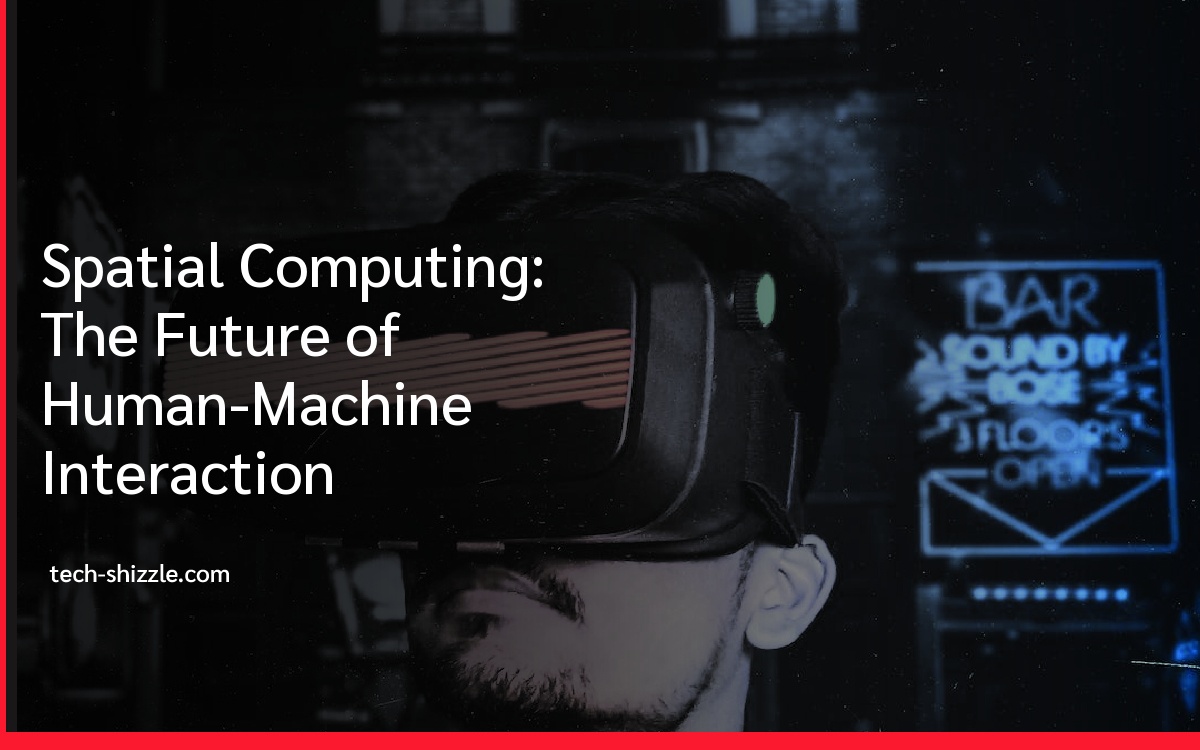
That day is not a long way off when digital information won’t be confined to screens but will exist all around you. It will respond to your movements and blend seamlessly with your physical environment. This isn’t science fiction—it’s spatial computing, a revolutionary technology that’s reshaping how we interact with machines and digital information.
As we stand at the threshold of this new era, understanding spatial computing isn’t just about keeping up with technology—it’s about preparing for a fundamental shift in human-computer interaction that will transform industries, workplaces, and daily life.

What Is Spatial Computing?
Spatial computing merges digital data with the physical world in real time, creating a computing environment that understands and responds to the three-dimensional space around us.
Unlike traditional computing that’s confined to screens, spatial computing brings digital information into our physical reality, allowing us to interact with it naturally using gestures, voice, and movement.
Distinguishing Spatial Computing from Related Technologies
While often mentioned alongside AR, VR, and MR, spatial computing is actually the overarching concept that encompasses these technologies:
- Augmented Reality (AR): Overlays digital content onto the real world through devices like smartphones or AR glasses, enhancing but not replacing physical reality.
- Virtual Reality (VR): Creates fully immersive digital environments that replace the physical world, typically experienced through headsets that block out real-world visual input.
- Mixed Reality (MR): Blends elements of both AR and VR, allowing digital objects to interact with the physical world in ways that appear to obey physical laws.
Spatial computing is the broader technological framework that enables all these experiences, focusing on how computers can understand and interact with physical spaces and objects.
Core Components of Spatial Computing
Spatial computing relies on several key technologies working in concert to create seamless experiences that bridge physical and digital worlds. Understanding these components helps grasp how this technology is revolutionizing human-machine interaction.
Sensors and Environmental Mapping

Like a digital sixth sense, sensors are the eyes and ears of spatial computing systems. They continuously gather data about the physical world through:
- LiDAR sensors that measure distances using laser light
- Depth cameras that create 3D maps of environments
- Inertial measurement units (IMUs) that track movement and orientation
- GPS for outdoor positioning
These sensors work together to create detailed spatial maps that serve as the foundation for all spatial computing experiences.
Artificial Intelligence
AI is the brain of spatial computing, interpreting the vast amounts of sensor data to understand environments and context. Think of it as a translator between physical reality and digital systems:
- Computer vision algorithms recognize objects, people, and spaces
- Machine learning models predict user intentions and needs
- Natural language processing enables voice interaction
- Spatial awareness algorithms track relationships between objects
Without AI, spatial computing would be blind to the meaning of the physical world it’s trying to augment.
Spatial Interfaces

Spatial interfaces are the touchpoints where humans and spatial computing systems meet. Unlike traditional interfaces confined to screens, spatial interfaces exist in three dimensions:
- Gesture recognition for intuitive interaction
- Eye tracking to understand user attention
- Voice commands for hands-free control
- Haptic feedback to create tactile sensations
These interfaces create the feeling of directly manipulating digital content in physical space—like reaching out and touching the internet.
5 Real-World Applications of Spatial Computing
Spatial computing is already transforming industries and creating new possibilities across various sectors. Here are five compelling applications demonstrating its practical impact today:
1. Manufacturing and Industrial Design

In manufacturing environments, spatial computing serves as a digital assistant that enhances human capabilities.
Engineers and technicians use AR headsets to visualize assembly instructions overlaid directly on components, reducing errors by up to 90%.
Maintenance teams access real-time equipment data and repair procedures without consulting manuals, cutting downtime significantly.
BMW and Airbus have implemented spatial computing solutions that project digital twins of products during the design phase, allowing teams to collaborate on virtual prototypes before physical production begins. This approach has reduced design iteration time by 30% and decreased material waste.
2. Healthcare and Medical Training

Spatial computing is revolutionizing healthcare by giving medical professionals “x-ray vision” through AR overlays that display patient data, anatomical information, and procedural guidance in real-time. Surgeons at major medical centers now use spatial computing platforms to visualize complex anatomical structures during procedures, improving precision and reducing complications.
In medical education, spatial computing creates immersive training environments where students practice procedures on virtual patients, gaining experience without risk. These simulations can replicate rare conditions and complications, preparing healthcare providers for scenarios they might otherwise never encounter during training.
3. Retail and Customer Experience

Retail is being transformed by spatial computing applications that bridge online convenience with in-store experiences. Virtual try-on solutions allow customers to see how products—from furniture to fashion—would look in their homes or on themselves without physical samples. IKEA’s spatial computing app has been shown to increase purchase confidence by 35% by letting customers visualize furniture in their actual living spaces.
In physical stores, spatial computing creates interactive shopping experiences where product information, reviews, and personalized recommendations appear as shoppers look at items. This digital layer of information helps customers make more informed decisions while maintaining the tactile benefits of in-store shopping.
4. Architecture and Urban Planning

Architects and urban planners use spatial computing as a virtual sketchpad that exists at full scale in the physical world.
By projecting building designs onto actual sites, stakeholders can experience spaces before construction begins, identifying issues that might not be apparent in traditional renderings or models.
City planners leverage spatial computing to visualize how new developments will affect sightlines, traffic flow, and neighborhood character.
This technology enables more inclusive planning processes by helping non-experts understand complex proposals through intuitive visual experiences rather than technical drawings.
5. Education and Training

Spatial computing is transforming education by turning abstract concepts into tangible experiences. Students can manipulate virtual molecules, walk through historical sites, or explore the human body from the inside—all within their classroom. These immersive experiences have been shown to improve knowledge retention by up to 75% compared to traditional learning methods.
For vocational training, spatial computing creates safe practice environments where learners develop skills through realistic simulations. From welding to emergency response, these applications allow trainees to build muscle memory and decision-making abilities without the risks or resource constraints of traditional training methods.
Ethical Challenges in Spatial Computing
As spatial computing becomes more integrated into our daily lives, it brings significant ethical considerations that must be addressed to ensure this technology benefits society equitably.
Data Privacy and Security
Spatial computing devices constantly scan and map environments, potentially capturing sensitive information about private spaces and personal activities. This raises critical questions about:
- Who owns the spatial data collected from your home or workplace?
- How is biometric data from eye tracking and gesture recognition protected?
- What happens when spatial maps include other people who haven’t consented to being recorded?
As these systems become more prevalent, establishing clear privacy frameworks and giving users control over their spatial data will be essential for responsible implementation.
Digital Divide and Accessibility
The high cost of spatial computing hardware risks creating a new digital divide between those who can access these technologies and those who cannot. This divide has implications for:
- Educational opportunities as spatial learning tools become more common
- Workplace advancement as spatial skills become valuable professional assets
- Access to services that increasingly rely on spatial interfaces
Additionally, current spatial computing interfaces may present accessibility challenges for people with certain disabilities, requiring thoughtful design to ensure inclusive experiences.
Workplace Displacement and Skill Transitions
As spatial computing automates and augments various tasks, workforce impacts will be significant:
| Industry | Potential Job Displacement | New Roles Created | Required Skill Transitions |
| Manufacturing | Manual assembly roles | Spatial workflow designers, AR maintenance specialists | Digital literacy, spatial interface navigation, data interpretation |
| Retail | Traditional sales positions | Virtual shopping assistants, spatial experience designers | Digital customer service, spatial content creation |
| Architecture | Traditional drafting roles | Spatial visualization specialists, immersive environment creators | 3D modeling, spatial UX design, collaborative AR workflows |
Addressing these transitions requires proactive education policies, corporate responsibility in retraining workers, and social safety nets to support those most affected by technological change.
Reality Distortion and Cognitive Impacts
As spatial computing blurs the line between physical and digital reality, we must consider the psychological and social implications. Extended use of mixed reality environments may affect how we perceive and interact with the physical world.
Research is needed to understand the long-term cognitive effects of regularly shifting between augmented, virtual, and physical realities, particularly for developing minds.
Future Trends in Spatial Computing
The spatial computing landscape is evolving rapidly, with several emerging trends poised to shape its development in the coming years:
Integration with IoT and Smart Environments
The convergence of spatial computing with the Internet of Things (IoT) will create environments that respond intelligently to our needs and preferences. Imagine walking into a room where:
- Lighting, temperature, and music automatically adjust to your preferences
- Relevant information appears in your field of view based on your current task
- Virtual interfaces for controlling devices appear when you look at them
- Spatial memory allows systems to remember object locations and user preferences
This integration will transform passive environments into responsive spaces that anticipate needs and enhance productivity and comfort.
Neural Interfaces and Thought Control

The next frontier in spatial computing interfaces may eliminate the need for physical gestures entirely. Neural interfaces that detect and interpret brain activity are advancing rapidly, with companies like Neuralink and CTRL-labs developing technologies that could allow direct thought control of spatial computing systems.
While consumer applications are still emerging, early implementations could include:
- Simple command execution through concentrated thought
- Emotional state detection to adjust environmental factors
- Accessibility solutions for people with limited mobility
- Enhanced learning through direct neural feedback
These interfaces promise to make spatial computing even more intuitive and accessible.
Spatial Computing in Smart Cities
Urban environments will be transformed by spatial computing technologies that create layers of digital information and functionality throughout public spaces:
Urban Navigation
AR wayfinding will replace traditional maps with intuitive directional guidance overlaid on the physical world. These systems will account for real-time conditions, accessibility needs, and personal preferences to create optimal routes through complex urban environments.
Public Services
Spatial interfaces will make public services more accessible by providing contextual information about transportation, facilities, and emergency services. Citizens will be able to report issues by simply looking at them and providing voice input, streamlining maintenance and response systems.
Community Engagement
Spatial computing will enable new forms of civic participation through visualization of proposed changes to public spaces, allowing citizens to experience and provide feedback on developments before implementation. This could democratize urban planning and strengthen community involvement.

Pioneering Companies in Spatial Computing
Several technology leaders are driving innovation in spatial computing, creating platforms and devices that showcase the potential of this emerging field:
Apple Vision Pro

Apple’s entry into spatial computing represents a significant milestone for the industry. The Vision Pro combines high-resolution displays, advanced eye and hand tracking, and Apple’s ecosystem integration to create what the company calls a “spatial computer.”
Key innovations include:
- EyeSight technology that shows the user’s eyes to others nearby, maintaining social connection
- Precise hand and eye tracking that eliminates the need for controllers
- Seamless integration with existing Apple services and applications
- Spatial audio that anchors sounds to their virtual sources
The Vision Pro demonstrates how spatial computing can extend existing computing paradigms into three dimensions while maintaining familiar workflows and interfaces.
Microsoft HoloLens

Microsoft has pioneered enterprise applications of spatial computing with the HoloLens, focusing on industrial, healthcare, and educational use cases. The HoloLens 2 represents a mature platform with a robust ecosystem of business applications.
Notable implementations include:
- Trimble’s use of HoloLens for construction site visualization and planning
- Toyota’s implementation for training and quality assurance in manufacturing
- Case Western Reserve University’s transformation of medical education
- Lockheed Martin’s 90% reduction in assembly time using holographic instructions
Microsoft’s approach demonstrates how spatial computing can deliver measurable ROI in enterprise environments by enhancing worker capabilities and streamlining complex processes.
Magic Leap

Magic Leap has evolved from a consumer-focused startup to an enterprise-oriented spatial computing company. The Magic Leap 2 offers one of the widest fields of view in the industry and innovative features like dynamic dimming for use in bright environments.
Distinctive applications include:
- Surgical navigation systems that overlay patient data during procedures
- Complex 3D visualization for engineering and design teams
- Training simulations for high-risk environments
- Remote expert assistance for field service technicians
Magic Leap exemplifies how spatial computing companies can pivot to find product-market fit in specialized industries where the technology solves significant challenges.
Actionable Insights for Businesses
As spatial computing continues to mature, organizations across industries have opportunities to leverage this technology for competitive advantage. Here are key strategies for successful implementation:
Start with Clear Business Objectives
Successful spatial computing initiatives begin with specific business problems rather than technology for its own sake:
- Identify high-value processes where spatial information is critical
- Quantify current inefficiencies or limitations in these processes
- Define measurable success criteria for spatial computing solutions
- Prioritize use cases with clear ROI potential
Organizations that align spatial computing with strategic objectives achieve faster adoption and more sustainable implementation.
Build Cross-Functional Teams
Spatial computing spans traditional organizational boundaries, requiring diverse expertise:
- Technical specialists who understand the capabilities and limitations of current platforms
- Domain experts who deeply understand the processes being enhanced
- UX designers who can create intuitive spatial interfaces
- Change management professionals who can facilitate adoption
The most successful implementations bring these perspectives together from the beginning, ensuring solutions that are both technically sound and practically useful.
Adopt an Iterative Approach
The rapidly evolving nature of spatial computing favors agile implementation:
- Begin with small-scale pilots in controlled environments
- Gather extensive user feedback on early implementations
- Measure both technical performance and user experience
- Iterate quickly based on real-world usage patterns
- Scale gradually as value is demonstrated
This approach minimizes risk while building organizational capability and user acceptance over time.
Prepare for Organizational Change
Spatial computing often transforms established workflows and requires new skills:
- Invest in training programs that build spatial literacy
- Create spaces for experimentation and learning
- Identify and support internal champions
- Develop new metrics that capture spatial computing’s unique value
Organizations that proactively address the human dimensions of spatial computing implementation see faster adoption and greater returns.
Embracing the Spatial Computing Revolution
Spatial computing represents a fundamental shift in how we interact with digital information—moving beyond screens to create experiences that exist in and respond to the physical world. As this technology continues to mature, it promises to transform industries, enhance human capabilities, and create entirely new categories of products and services.
The convergence of advanced sensors, artificial intelligence, and intuitive spatial interfaces is creating computing experiences that feel less like using technology and more like interacting with an intelligent extension of our physical environment. From healthcare to manufacturing, education to retail, spatial computing is already demonstrating significant value while pointing toward even more transformative future applications.
Organizations and individuals who develop spatial literacy and begin exploring applications today will be well-positioned to thrive as this technology becomes an integral part of our digital infrastructure. The spatial computing revolution isn’t just coming—it’s already here, reshaping our relationship with technology and expanding what’s possible at the intersection of physical and digital worlds.

Luke Jackson is a seasoned technology expert and the founder of Tech-Shizzle, a platform dedicated to emerging technologies. With over 20 years of experience, Luke has become a thought leader in the tech industry. He holds a Master’s degree from MIT and a Bachelor’s from Stanford. Luke is also an adjunct professor and a mentor to aspiring technologists.